 "The warm and joyful sequel to All Creatures Great and Small, by James Herriot, the Yorkshire Dales veterinary. This book takes place after his marriage to Helen and before he is posted to the Royal Air Force in World War II. He reminisces about his various cases, often sharing more about the farmers than about his patients. He shares about his courting of Helen and about his luck at finding the perfect wife. I especially like the part where he advises that one study the relationship between your choice of mate and her father. Helen dotes on her father after the death of her mother, and Herriot is the lucky recipient of a doting wife. Herriot makes all his characters come alive with his rich and homey descriptions. He writes more than once that he loves his work and despite the hardships he is a happy man with his choice of work. The world was lucky to have such a man write his memoirs for the vast audience that accepted and loved his books.
Saturday, February 20, 2016
All Things Bright and Beautiful
"The warm and joyful sequel to All Creatures Great and Small, by James Herriot, the Yorkshire Dales veterinary. This book takes place after his marriage to Helen and before he is posted to the Royal Air Force in World War II. He reminisces about his various cases, often sharing more about the farmers than about his patients. He shares about his courting of Helen and about his luck at finding the perfect wife. I especially like the part where he advises that one study the relationship between your choice of mate and her father. Helen dotes on her father after the death of her mother, and Herriot is the lucky recipient of a doting wife. Herriot makes all his characters come alive with his rich and homey descriptions. He writes more than once that he loves his work and despite the hardships he is a happy man with his choice of work. The world was lucky to have such a man write his memoirs for the vast audience that accepted and loved his books.


Friday, February 12, 2016
All Creatures Great and Small
Sometimes I just want to read a sure bet, something good and wholesome. It has been a while since I've read some of James Herriot and decided to read the first of his series on veterinary practice in England in the 1930's. It was a best seller when it first came on the scene in America in the 70's, and for some reason or other I never got around to reading it until I became a librarian and I read it to my patrons at the nursing home. It's a perfect read aloud for that audience, short chapters with little connecting them so that if a patron would miss a week or so, he'd be able to pick up the story just fine. Also I live near the farms in Ohio and I think the elderly could relate to the stories, although I think James Herriot's stories can appeal to most. Just the other day my hairdresser said she read them in her youth while watching the television series with her mother. I tried to get my daughter to read the first in the 80's or early 90's but I can't remember if she made it through the book. I see that there is talk of another filming of the James Herriot stories, but I think they couldn't improve on the BBC series with Christopher Timothy and Robert Hardy.
Monday, January 25, 2016
The Foreign Correspondent by Alan S. Cowell
This story begins as the narrator, Ed Clancy, tells about the Nonstop News Desk, NND, in Paris with his old friend and abettor, Joe Shelby, to post the Internet news in the wee hours of the morning, before New Yorks papers were up and running. Joe Shelby's job was to call the bureaus in foreign cities and verify the stories coming in over the wires, and then to write the copy and Ed is to post it on the Internet. Early in the story Shelby makes a mistake and covers it up and this comes to haunt them in the end. The beginning of the book lays down the character of Joe Shelby, a foreign correspondent, filling in the details of his past loves and past secrets. He is avoiding the women from his past, but they too are in Paris now. Ed Clancy has settled down in Paris with the love of his life, Marie-Claire Risen, and he doesn't want Shelbys interference. It is the story of the demise of print, "that great, gorgeous, messy alchemy of ink and hot type and whirring reels of paper and working stiffs in stained coveralls." This is an action adventure story, with the drama of love spicing things up a bit. It's a story of revenge, and justice, told with a literary bent. A good read if you hang in there through the set-up. "Alan S. Cowell is a senior correspondent for the New York Times based in Paris."
Plainsong by Kent Haruf
Plainsong by Kent Haruf
This was such an excellent book. Amazed that it took me so long to find it. Literary, character driven, with a real sense of place. I savored the book as the prose was beautiful. I see that it was recommended for YA, but I would say the upper grades of high school would be better. Some serious issues were addressed. Basically it is the story of a father, his two sons, a teacher, a pregnant student, and two older bachelors whose lives intersect to create an extended family. They all grow up in the novel as they face new challenges and become much deeper for it. I especially liked the story of Victoria Roubideaux, the pregnant teenager dealing with the rejection of her mother. She has to sort out how she really feels about the father of her child and how she is going to care for this child that she anticipates with joy and fear. She is wise beyond her years. Tender is the adjective that I would use to describe the author's attitude toward his characters. A good story, with further stories in his later books about Holt, Colorado..
This was such an excellent book. Amazed that it took me so long to find it. Literary, character driven, with a real sense of place. I savored the book as the prose was beautiful. I see that it was recommended for YA, but I would say the upper grades of high school would be better. Some serious issues were addressed. Basically it is the story of a father, his two sons, a teacher, a pregnant student, and two older bachelors whose lives intersect to create an extended family. They all grow up in the novel as they face new challenges and become much deeper for it. I especially liked the story of Victoria Roubideaux, the pregnant teenager dealing with the rejection of her mother. She has to sort out how she really feels about the father of her child and how she is going to care for this child that she anticipates with joy and fear. She is wise beyond her years. Tender is the adjective that I would use to describe the author's attitude toward his characters. A good story, with further stories in his later books about Holt, Colorado..
Monday, January 11, 2016
Goodreads 2016
On Goodreads I posted that I want to read fifty books in 2016. Just what I did in 2015, but I am going to read from the Adult Reading Round Table suggestions in various genres in my study of Readers Advisory in the library setting. NovelistPlus ( a database found on most library websites) had a list in the Readers Advisory Toolbox called ARRT Popular Fiction List under especially for Readers Advisory that I am going to read from, to familiarize myself with new authors. I think I will read a different genre pick from their list and then a book from my own bookshelf. I really do need to read the books that I own. From my shelf I am going to read "The Paris Correspondent: a novel of newspapers, then and now" by Alan S. Cowell. Sound like a literary novel of which I usually enjoy the most. I read that to help a reader interested in literary fiction go to the awards websites and their lists should satisfy most readers of literary fiction. I am going to post a few websites here:
The Man Booker Prize "The Man Booker Prize promotes the finest in fiction by rewarding the very best book of the year. The prize is the world's most important literary award and has the power to transform the fortunes of authors and publishers."
National Book Awards "The mission of the National Book Foundation and the National Book Awards is to celebrate the best of American literature, to expand its audience, and to enhance the cultural value of great writing in America."
Pulitzer Prize "Established in 1917 and endowed by Joseph Pulitzer, the noted Hungarian immigrant newspaper publisher, the Pulitzer Prize categories included here recognize distinguished works of fiction and nonfiction published in book form by an American author, preferably dealing with American life."
The Man Booker Prize "The Man Booker Prize promotes the finest in fiction by rewarding the very best book of the year. The prize is the world's most important literary award and has the power to transform the fortunes of authors and publishers."
National Book Awards "The mission of the National Book Foundation and the National Book Awards is to celebrate the best of American literature, to expand its audience, and to enhance the cultural value of great writing in America."
Pulitzer Prize "Established in 1917 and endowed by Joseph Pulitzer, the noted Hungarian immigrant newspaper publisher, the Pulitzer Prize categories included here recognize distinguished works of fiction and nonfiction published in book form by an American author, preferably dealing with American life."
Friday, January 8, 2016
The Christie Caper by Carolyn Hart
The Christie Caper was a Death on Demand mystery featuring Annie and Max Darling. They have planned a conference to honor the 100th birthday of Agatha Christie, with a treasure hunt, a ball, and Christie trivia all through the story. The book was written in 1991 and is the seventh in the Death on Demand series. The conference attendees did not anticipate a murder to take place, but it did, getting Annie and Max and their friends in the sleuthing. A light-hearted cozy mystery that promises to keep you guessing till the end. I am always reading a Christie mystery and this only wanted me to read more of Agatha Christie. It helps to be a Christie fan when reading this novel.
Thursday, January 7, 2016
The Plot Against America by Philip Roth
Philip Roth wrote " The Plot Against America: a Novel in 2004. The narrator is himself at the young age of seven, living in Newark, New Jersey, Roth's own childhood home. Many of Roth's books take place in Newark, but this is a novel of alternative history. Charles A. Lindbergh has been elected as the Republican President of the United States instead of Franklin D. Roosevelt for his third term in October 1940. His platform is American First, promising to keep America out of the European War that started in 1939. Roth's premise is that Lindberg is Anti-Semitic and fears that the Jews that are in power in government and the media are pressuring the nation into World War II. Philip's family include his father, an insurance salesman, his mother, homemaker involved in the PTA, and his older brother Sandy, who has a talent for drawing. Young Philip is seen absorbing all the fears and terrors that result in the Jewish population of Newark becoming weakened by the displacement of their numbers. I liked the rich detail of the Jewish family in the 1940's located in a Jewish community in Newark, New Jersey. Rich characterization of Philip and his family add much to the story. I recommend this novel to those who like historical novels. In the back of the book Roth lists books that provided him with the history of the times, and also an accurate account of the real characters mentioned in the book such as Fiorello H. La Guardia and Walter Winchel, gossip columnist.
Thursday, December 31, 2015
The Monogram Murders: The New Hercule Poirot Mystery by Sophie Hannah
Hercule Poirot meets a young woman in distress at Pleasant's Coffee House in London on a Thursday evening. He goes there because they have the best coffee in London. He worries about Jennie all through the book, sure that she is tied to the murders discovered at the Bloxham Hotel, the case of Edward Catchpool, a policeman friend of Mr. Poirot's from Scotland Yard. Catchpool is the narrator of the story. Poirot helps the investigation by asking all the right questions and by using his little gray cells. All through the book he is trying to educate Catchpool in the ways of detection. Three people are murdered in the Bloxham Hotel, all from the same small village, all found in their own rooms, poisoned. Hannah does an excellent job of recreating the 1930's London so familiar to readers of Agatha Christie's Hercule Poirot mysteries. It was a good read and had me guessing to the end.
The Invention of Wings by Sue Monk Kidd
| I always enjoy a historical fiction based on real people's lives. This was a surprise to me as I thought when I started it that the book was all fiction. I liked how Sue Monk Kidd told at the end what parts she re-imagined and what parts were based on actual facts from letters and journals. As she was writing about authors from the 1830's this helped to make the story more authentic. Slave narratives are difficult for me to read, but the story was well-written and I kept up with the story, even though I had wanted to quit when the story became too gruesome. It's amazing how abolitionists became women suffragettes, fighting for the rights of women and slaves both. Amazing that these women wrote about slavery before Uncle Tom's Cabin was published. I liked reading about the bravery of these two sisters. This would make a good movie. |
Saturday, October 31, 2015
Borrowing from another blog
In Autumn by Winifred C. Marshall
They're coming down in showers,
The leaves all gold and red;
They're covering the little flowers,
And tucking them in bed.
They've spread a fairy carpet
All up and down the street;
And when we skip along to school,
They rustle 'neath our feet.
They're coming down in showers,
The leaves all gold and red;
They're covering the little flowers,
And tucking them in bed.
They've spread a fairy carpet
All up and down the street;
And when we skip along to school,
They rustle 'neath our feet.
Monday, October 12, 2015

From Publishers Weekly
After working as his assistant for more than 20 years, Sabine marries her beloved boss, Parcifal, knowing that he's gay and has just lost his lover. What she doesn't find out until after his death from AIDS is that Parcifal was actually Guy Fettera from Alliance, Neb., and had a family he never spoke about. Karen Ziemba creates an appropriately light tone for the narrator, despite some dark events that Sabine discovers when she visits Parcifal's sweet, dysfunctional family. She crafts clear, flat Midwest accents for the magician's mother and sisters and her pace and annunciation are excellent. Ziemba's men all sound alike, but they play minimal roles. She is an experienced and professional reader with just the right stuff for Patchett's 1997 novel, which probes the complex motives of Parcifal and his assistant. A Harcourt paperback (Reviews, July 14, 1997)Copyright © Reed Business Information, a division of Reed Elsevier Inc. All rights reserved. --This text refers to an out of print or unavailable edition of this title.
West of Sunset
After reading about the Great Gatsby this summer and then re-reading the novel, I was surprised to find a new novel written by Stewart O'Nan about the last years of F. Scott Fitzgerald in "West of Sunset." F. Scott Fitzgerald in the middle of the 1930's was broke as he had large bills paying for his daughter Scottie's boarding school and his wife's mental illness and the sanitarium that took care of her. He hadn't had much luck writing short stories or novels; at one point in the story he receives a royalty check for under two dollars. "The Great Gatsby" was not a financial success, it came out to mixed reviews. So, he heads to Hollywood lured by a set salary for working on various screenplays. The book gives a good idea of the work schedule that Scott kept, and the difficulties he had with various Hollywood types. The frustration was great as the studios would take him off a job as they would make a decision that would stop production and send him off onto a new project. As soon as the studio would move him it was expected of him to turn over his writing on one project and start on another one in short order. One could say, his work was not his own, that it belonged to the studio as long as it was paying his salary as a scriptwriter. Included in the story is his various friendships with other writers and actors and his affair with Sheliah Graham, the Hollywood columnist. He meets her early in the Hollywood years, and she keeps him company off and on as she tries to get him to stop drinking, and nurses him in his final days. F. Scoot Fitzgerald died December 21, 1940 at the age of 44.
Tuesday, September 1, 2015
The Wright Brothers by David McCullough
I just finished reading, "The Wright Brothers" by David McCullough, published 2015. Living near Dayton, Ohio I think this is a necessary story that should be known by the Dayton population. In an era where so many things were being discovered and manufactured in Dayton, OH, there was much speculation and disbelief in the ability for man to fly in 1900. But, the Wright brothers were unique in that their parents supported their experiments and encouraged their research. Brought up in a home with many books, both Wilbur and Orville Wright were curious by nature. Without the support of their parents I don't think they would have accomplished all that they did. Everything they touched as children was carefully picked up by their mother and put on a shelf until they could get to it later. This in a house of five children. Even when Wilbur failed to go to college after such promise, they patiently let him think his own thoughts and try his own hand at business. The companionship between the two brothers was another great asset to their quest for knowledge. They talked over everything, with little competition between them. Being so able to work together side by side for so many years helped them accomplish their amazing work. This was a fascinating look at the lives of the whole Wright family. I even learned that the Wright Library in Oakwood, OH is named for their sister, the teacher and college graduate, Katherine Wright who was also a huge asset to their work, as the three of them lived in the family home while the Bishop, their father, traveled all over the country in his work. Their mother had died earlier. I learned that they spent many years perfecting their "Flyer" as they called it, taking it to many countries to demonstrate their invention. There were many Flyers as improvements were made.
Friday, July 31, 2015
The Astronaut Wives Club by Lily Koppel

I read “The
Astronaut Wives Club” by Lily Koppel after I saw part of one episode on this
season’s ABC program called the Astronaut Wives Club. As much as I like to
watch TV, I always feel a book is better. I remembered that the book had come
out in 2013 so I decided to look into that. Once again I wasn’t disappointed. I
knew some of the stories because I recently read Jim Lovell’s book, “Lost Moon,”
after I saw the Apollo 13 movie. I liked the way Ms. Koppel told the stories in
quick bursts, but sometimes she jumped right over important events and didn’t
elaborate on them. On page 275 when Rene Carpenter was with the Bobby Kennedy
campaign, Ethel asked Rene to: “please help Bobby.” Ms. Koppel writes that “Rene
came in and saved the day,” but never explained what that meant. Two paragraphs
later “Bobby Kennedy was shot in the Ambassador Hotel,” and John Glenn and his
wife Annie were taking five of Bobby’s eleven kids to their home Hickory Hill.
The growth of the space program
took place from 1959 to the present day, but they had their disappointments
such as Nixon cancelling the Apollo program, even as two rockets had already been
built. This was the time of empowerment for women with the start of NOW. These
conservative women and their star-struck men had to grow with the challenges to
their beliefs and life style. The support that the Astronaut Wives Club
offered to the women was important. From the book we learn that Marge Slayton
considered it “a lifetime membership.” They still hold reunions and consider it
a privilege to be on-call to their friends from the space era. I recommend this
book.
Sunday, May 31, 2015
"So We Read On: How the Great Gatsby Came to be and Why it Endures" by PBS Fresh Air book reviewer Maureen Corrigan is a delightful book. Ms. Corrigan teaches a class on "The Great Gatsby" by F. Scott Fitzgerald at George Washington University in Washington, D. C. and presents programs on the book for The Big Read, a National Endowment for the Arts promotion on classic books around the country. From this latest book of hers we read about her absolute passion for the greatest novel in American Literature, and she does take passion to a whole new level. She takes her research into obscure rare book and special collections in various libraries around the country to research why "The Great Gatsby" continues to be the great American novel even though at the first printing it was a flop, selling a measly 23,000 copies for Fitzgerald and leaving a mass of remainder copies at Scribner's. Her question is how it has remained one of the top novels read in high school English classes around the country and stays on some of the syllabi of various colleges in the United states. The book was published in 1926, and one accounting of the poor readership was the onslaught of the great depression in 1929 that left little taste for the flamboyant lifestyle presented in the Great Gatsby, a life of booze, bootlegging and marital bed swapping. Fitzgerald was known for his wild drinking and bizarre behavior in the 20's. His novel came out when he was just 26 years old himself, living the good life that many people could not relate to in the ensuing years. One thing Ms. Corrigan uncovered was that after his early death in 1940, Fitzgerald had his handful of literary critics who felt that his effort was to be applauded and kept the American people from forgetting his name. She also uncovered the effort during the war to replicate great novels for the American servicemen in paperback to accompany them into battle and prison of war camps. The government issued copies were called Armed Services Collections, a total of 1322 titles that were printed in small paperback form, "nearly 123 million books were distributed to U.S. troops overseas." p.230 If you love "The Great Gatsby" then you'd love to read how it has remained in publication for many years, with several movies being made for good measure.
Monday, May 18, 2015
Leave Me Alone, I'm Reading
 I just finished Maureen Corrigan's 2005 memoir on reading. She is the book reviewer on NPR's Fresh Air and has been since 1989. She lives in Washington D.C. with her husband and daughter. She is also a literature instructor at George Washington University. Maureen Corrigan has a PhD. in literature from the University of Pennsylvania, and I found the beginning of the book a little off-putting. Maybe because I haven't read all the great English literature she was writing about and making the comparisons with. She writes a lot about the "women's extreme-adventure stories" and this was a new genre to me. But I learned and isn't that what you are supposed to do when you read. Because she is such a voracious reader she keep talking about why we read. I am very interested in that because I read so much also and often ask myself that question. For me, reading jars my memory in a way that is comforting to me; that I can remember and that I find myself in my reading. She also has a new book out, " So We Read On: How the Great Gatsby Came to Be and Why It Endures." Because I think that "The Great Gatsby" is one of the finest books in American literature I am finding this a very interesting book to read also.
Back to "Leave Me Alone, I'm Reading" I was excited to get into the part of the book that she writes about her love of the detective series. That's where we hit a common thread. Since leaving the library I have been free to read just for myself and I keep coming back to the detective series for pleasure. I like to start at the beginning of a series that has the same character and read in the published order of the books. I find that FantasticFiction does an excellent job of listing the books in order in an author's series. Some series must be read to follow the story line, others are written so that if you jump right in anywhere you get the gist of the storyline and you can enjoy the books that way. The alphabet mysteries by Sue Grafton don't have to be read in order. For example her book "W is for Wasted" has her living in the same apartment with the same landlord and time just seems to standstill at 1986. I have jumped around in that series without missing a beat. But Elizabeth George's Inspector Lynley moves the characters along in their own storyline apart from the mystery, and I think they are more enjoyable read in the order they were published. That is just my personal preference. In the back of Maureen Corrigan's book is a list of Recommended Reading and I think I will be reaching for my book for this list in the future.
Monday, May 4, 2015
Death on Demand series
 Carolyn Hart writes mysteries for the light-hearted. I love the Death on Demand series. Annie and Max Darling live on Broward's Rock, an island off the coast of Georgia. Annie's business venture is the Death on Demand Bookstore that features the latest mystery novels, nonfiction books on mysteries, and collectible mystery novels. Max is involved with his choice job as a consultant for his own firm, Confidential Commissions. "Max's agency specialized in solving problems." This novel, "Death by Midnight" has Annie and Max baffled as they try to be amateur sleuths trying to solve the murders on their island. One of the clues is found on the murder victim's cell phone, a picture taken at midnight of a bundle wrapped in a towel, but where was this photograph taken? Of course as usual Annie gets wrapped up in the murder of friends and neighbors, and invariably gets too close to the murderer for her own good. The mystery keeps one involved and the name-dropping of all the classic mystery novels that Annie can think of keeps a booklover like me entertained. To keep myself in the spirit of the Annie-Max mysteries I am now reading, "A Little Class on Murder", which is educational as well as good fun. This book reminds me that Carolyn G. Hart is also a teacher, as Annie tries to teach as an adjunct professor thirteen miles from Broward's Island, on the mainland. A good academic novel.
Thursday, April 9, 2015
Orphan Train by Christina Baker Kline
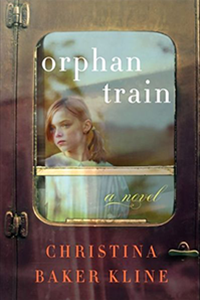 Christina Baker Kline Ms. Kline's novel transports us to 1929, New York City when an Irish family faces hardship after a fire devastates their family and the Children's Aid Society has a solution. Children who are orphaned in New York City are sent out west on Orphan Trains where the children can be adopted by willing Midwestern families. The novel is based on the historical fact, but weaves a fictional tale about the events in 1929 with the events in 2011 when the protagonist, Niamh, meets up with another orphan teen in foster care. An unusual friendship develops between 91 year old woman and Molly. Understanding the hardships each other has faced brings these two unlikely women together, each offering something to the other that surprises even themselves. A good story with natural surprises at each turn.
Friday, February 20, 2015
Winter reading, 2015
After leaving a great job in January, 2015, I am having trouble finding the time to read. My new job leaves me exhausted. Midnight to 8 am schedule leaves me asleep all day just to go back and do it again. I have re-read Murder at Hazelmoor by Agatha Christie, 1931. I like to read this when the winter turns nasty and cold, especially if we are in the middle of a snow storm here in southwestern Ohio. The winter is hanging on with this sub zero temperatures and my cozy read comforts me. Another book I read this winter was "Berlin Underground" by Ruth Andreas-Friedrich about the resistance by the Germans from 1938-1945, especially her small group of saboteurs. From the book jacket, "Mrs. Friedrich's group was the only non-Communist resistance group in Berlin to be recognized by the Russians. They had already been 'screened,' and given a clean bill of health by the American." This book really gives a clear picture of war on the city's citizens and the chaos that ensues at the end of the war. I am in the middle of the sequel, "Battleground Berlin: Diaries 1945-1948." There seemed to be little hope that things would ever improve, but most problems stemmed from the precarious alignment between the Allies and what they were trying to accomplish. The Russians and the Americans were busy shooting at each other at various skirmishes many nights and made life very difficult to continue with good faith. Many efforts were an example of one step forward and two steps backward. There isn't a good track record of life to return for the innocents after a war. A sad story, but a record of many brave attempts to build a new political order out of rubble, and still this continues. I heard today that there is a effort to re-take Mosul, I can only imagine the misery that continues. All three of these books have been good to read, and for that I am grateful.
Tuesday, November 11, 2014
Americans in Paris
I just finished "American in Paris: Life & Death Under Nazi Occupation by Charles Glass. On this Veteran's Day I am still amazed by the courage of all Veterans who served in WWII. This book captures the lives of Americans in Paris who risked their lives to help RAF and US airmen who were shot down over France during the occupation to escape back to England and to continue the fight against the Axis forces. What brave men, to be willing to continue to fight after being shot down and/or injured. We have no idea of their courage. It took courage to defy the Nazis knowing of their tactics of retribution: being killed as a hostage when any attempt to resist was detected. And to be working as a spy against the Nazis when it appeared to your friends and co-workers that you were collaborating with the enemy. What a conundrum that would be, I cannot comprehend. We Americans owe everything to the courage of these men and women, veterans or resistance. That book left me with many unanswered questions: what happened to Petain after the war? Where did the millions that Charles Bedaux have in his businesses end up? How did the French fare after the war? Did the people of the French Resistance get a hand in the government after all their sacrifices to fight fascism? Ah, to find more books to read, my greatest pleasure at this stage in my life. I also re-read, " With My Heart in My Mouth" by Duncan Norton-Taylor about the war in the Pacific as the tide was turning in our favor.The battle of Kula Gulf was detailed in this book by a 40-some war correspondent who was not trained to be a soldier. He survived the war to become the managing editor of fortune magazine, retiring in 1967. War correspondents in this time and then should also be commended for their bravery. (Musing of a chicken at heart.)
Sunday, August 10, 2014
Bel Canto by Ann Patchett
I just finished Ann Patchett's famous book, Bel Canto. It takes place in a unnamed South American country. The Vice President is hosting a birthday party, and he invites the famous opera singer to perform. The house has over one hundred guests, and after the sixth song, the lights go out, and a terrorist group from the jungle has taken all of the guests hostage. Friendships are made, and the barrior between the hostages and their captors breaks down. The writer has done a marvelous job of getting into the personalities of the characters. Put into a strange relationship with each other, they are all calmed when the opera singer decides that she needs to practice her singing, and finds an uxexpected accomplice in the guest list of cororate leaders from various countries. Gen, the translator for the Japanese birthday guest, is able to communicate in multiple languages. Pretty soon he is the secretary for the terrorist group, as well as the translator between the rich Japanese businessman and the American opera star. It is a well told story.
Wednesday, June 4, 2014
I was surprised how much I loved "Crazy: a Novel" by William Peter Blatty. I received it as a birthday present from my brother who only bought it for the blurb on the cover by Julie Andrews, " Crazy is terrific! A wonderful novel! It's funny, touching and so full of love!" I agree. Joey El Bueno starts his tale in NYC 1941 when he is thirteen. He meets Jane, an eighth grader, who is in and out of his life mysteriously. She tells him after spending the day with him, "That is okay to love me. But don't be in love with me. Okay? And be good to your father. He loves you so much." and then she is out of his life and he can't find her." What a mystery she was: plucky as short, fat Tony Galento getting hammered in the ring by Joe Louis, and jumpy as fleas who've just gotten great news; dropping the F-bomb and then teaching me to pray; making sense, then being totally wingy." Read the story of Joey El Bueno and be touched, despite Blattty's long run-on sentences, which I just had to mark up in my book for effect until I got hooked on the story. Wow is all I can say.
Tuesday, February 25, 2014
My Year With Eleanor by Noelle Hancock
http://noellehancock.blogspot.com/
 This is a great book. I loved it! Yes, I have fear, fear of everything. Even when I conquer one fear, it will still haunt me again and again. The only fear I overcame was public speaking, forced to do it at my job as an adult librarian. Who knew how much public speaking there would be for someone who lists reading as her favorite activity? When Noelle Hancock loses her job as a blog writer she finds Eleanor Roosevelt to inspite her to " Do one thing every day that scares you." Living in New York City she finds lots to do that is scary, ie. first she signs up for trapeze lessons on a roof top in NYC, (luckily she convinces her friends to do it with her!) She and her friends also go sky-diving for the first time, then she learns to pilot a fighter plane that chases another newbie in a dog fight! Then her father's friend suggests climbing Mt. Kilimanjaro, Africa's highest point and the world's highest free-standing mountain, which is actually a volcano that is showing signs of renewed activity! Now that is scary! Interspersed in her narrative about her friends, her boyfriend, and her therapist are stories about Eleanor Roosevelt learning to overcome her fears. Mrs. Roosevlt really does some incedible things herself, like flying in a plane so prone to ignite the government feels it is too risky for President Roosevlt to fly in, so they allocate it to her. Another quote I like from Eleanor Roosevelt, " No one ever lives up to the best in themselves all the time, and nearly all of us love people because of their weaknesses rather than because of their strengths."
This is a great book. I loved it! Yes, I have fear, fear of everything. Even when I conquer one fear, it will still haunt me again and again. The only fear I overcame was public speaking, forced to do it at my job as an adult librarian. Who knew how much public speaking there would be for someone who lists reading as her favorite activity? When Noelle Hancock loses her job as a blog writer she finds Eleanor Roosevelt to inspite her to " Do one thing every day that scares you." Living in New York City she finds lots to do that is scary, ie. first she signs up for trapeze lessons on a roof top in NYC, (luckily she convinces her friends to do it with her!) She and her friends also go sky-diving for the first time, then she learns to pilot a fighter plane that chases another newbie in a dog fight! Then her father's friend suggests climbing Mt. Kilimanjaro, Africa's highest point and the world's highest free-standing mountain, which is actually a volcano that is showing signs of renewed activity! Now that is scary! Interspersed in her narrative about her friends, her boyfriend, and her therapist are stories about Eleanor Roosevelt learning to overcome her fears. Mrs. Roosevlt really does some incedible things herself, like flying in a plane so prone to ignite the government feels it is too risky for President Roosevlt to fly in, so they allocate it to her. Another quote I like from Eleanor Roosevelt, " No one ever lives up to the best in themselves all the time, and nearly all of us love people because of their weaknesses rather than because of their strengths." Thursday, January 16, 2014
The Ghost Writer by Philip Roth
Philip Roth
Philip Roth’s book, “The Ghost Writer,” leaves one feeling that the book should be discussed in an American Literature class. There is so much to discuss. It needs to be analyzed in detail –all the clever lines need to be underlined and studied. I haven’t read Philip Roth for some time, but reading this makes me want to change all that. This book was recommended for December reading in “ A Reader’s Book of Days” by Tom Nissley. “The Ghost Writer” was published in 1979, twenty years after his famous first novel, “Goodbye, Columbus.” I love to read books with a winter setting during the snow-filled days. The opening line of the book is, “It was the last daylight hour of a December afternoon more than twenty years ago….” A young twenty three year old published writer has been invited to the home in upper New York of his idolized writer of Jewish extraction who is fifty-six years old. This older gentleman is very self-effacing as he gains the attention of the younger generation. What draws out in the next twelve or more hours is the adoration of the twenty three year old writer looking for a father figure to understand and appreciate his art as a Jewish writer. The introduction of the famous author’s wife and a young refugee from Europe act out a drama that the writer begins a fantasy and imaginational dream about that validates him as a loyal Jew.
Monday, January 13, 2014
Monday, January 6, 2014
Twelve Years a Slave by Solomon Northup
http://en.wikipedia.org/wiki/Twelve_Years_a_Slave I just finished reading the book that was published in 1853 by Solomon Northup. It was hard to read of his misfortune and the hardships that he suffered at the hands of the slave owner in his last years on a cotton platation. I can't imagine not being able to write a letter to my loved ones, and especially loosing my name. Everytime the slave is sold he is known by his master's last name. After years of suffering and hopelessness he finds a carpenter from Canada who will write his letter and post it for him and the process begins from New York that had a law on their books since 1840 that no free black man could be sold. Money is taken from the state to send a representative to Louisana to bring him back home safely. Alas he tells of many slaves who have faced imprisonment since infancy and have no hope. The tearing apart of the children from their parents is the most hearbreaking, usually because there is little sympathy for their fellow man. I don't think I could watch the movie that was made this year for the suffering and violence that would be depicted..
Monday, December 23, 2013
Friday, August 9, 2013
Inspector Lynley
I read mystery series in order usually, but I jumped ahead in Elizabeth George's series on Inspector Lynley and read A Suitable Vengeance. I was surprised it was a look at the past, the beginning of the romance between Deborah Cotter and Thomas Lynley. The story has Inspector Lynley bringing his fiance back to Cornwall to announce his engagement. Long time friends and some employed on his family estate get involved in a murder of a local journalist. Inspector Lynley does his investigating with his long-time friend Simom St. James, the forensic scientist. A very good read and a basic background to Inspector Lynley's romantic background. Then I read Well-Schooled in Murder, no. 3 in the series. Lynley gets caught up in a disappearance of a student at a prep school where on of his former Eton chums is now a teacher. It becomes clear that the boy disappeared at the school and the body was dumped at the village churchyard. A sad story, but the sequence is in timing with Payment in Blood. I like the background stories of these well written mysteries as well as the mystery itself. I am looking forward to continuing the series.
Tuesday, July 30, 2013
Inspector Morse
I started watching the Inspector Morse series on DVD that I borrowed from the library. I like to start things at the beginning, and The Dead of Jericho was Colin Dexter's fifth book in the series. Detective Lewis is his co-worker and has been with him for awhile in the book. Lewis knows all the quicks of Morse such as his uncanny ability to solve a mystery, his moodiness, his penchant for women and his high intelligence. Morse is well read and listens to classical music. The setting is University of Oxford in England, which plays well with the series as the scenery is beautiful and historical. Lewis is married with one young daughter. I liked the story, but there were so many twists and turns I don't know if I could have followed it as well if I hadn't seen the TV version ahead of time. I like the erudite, literate writing style and I think I will try to read more of this interesting series. For the TV series The Dead of Jericho introduces Inspector Morse and Detective Lewis.
Wednesday, July 17, 2013
Summer Reading
I finished the Revenge of the Middle-Aged Woman by Elizabeth Buchan. If you like Rosemunde Pilcher then you would like this English romance novel. Rose Lloyd has been replaced by her assistant as her husband, Nathans mistress. Not only has he betrayed his wife, but now he is in love and wants to leave his wife for the assistant, Minty. Then as things couldn't get worse, her company has replaced her job with the assistant. This book is filled with reminiscences, garden descriptions and lots of family drama. A good read for the summer months. I also liked the audio version with Jean Gilpin as the reader. Excellent.
Wednesday, June 19, 2013
Charlaine Harris and Caroline Graham
There is more to Charlaine Harris than the Sookie Stackhouse True Blood vampire series. Although Ms. Harris is getting all the fame for that series, I prefer the Aurora Teagarden mystery series. I know its simple and fun, but there you have it. I just finished reading A Bone to Pick about a small town librarian who inherits a house and a lot of money. What fun! Only trouble there is a secret in the house and Miss Teagarden isn't about to involve the police with her name this time. How will she protect her name and the name of her benefactress with what she discovers hidden in the house? A fun read, and more in the series. Always nice to know if its a series that I like has more to continue with.
I also finished a book by Carline Graham of the Midsomer Murder series on BBC. I know she only wrote seven of the Tom Barnaby series and I have been wanting to read all of them, but maybe I have already and just forgot. I picked up Murder at Madingley Grange hoping it was a Chief Inspector Banaby mystery, but it proved to be something else entirely. Not bad, a comedy of errors in a grange house that is owned by the protagonist's aunt who has gone off on a cruise, leaving her niece and nephew Laurie and Simon Hannaford in charge. He thinks it's a great idea to invite strangers to the house for a mystery "Murder" weekend of fun and games. Laurie is shy and hesitant, but a good cook and she is persuaded to play the part of hostess. Its a fun farce and easy reading for a summer day.
I also finished a book by Carline Graham of the Midsomer Murder series on BBC. I know she only wrote seven of the Tom Barnaby series and I have been wanting to read all of them, but maybe I have already and just forgot. I picked up Murder at Madingley Grange hoping it was a Chief Inspector Banaby mystery, but it proved to be something else entirely. Not bad, a comedy of errors in a grange house that is owned by the protagonist's aunt who has gone off on a cruise, leaving her niece and nephew Laurie and Simon Hannaford in charge. He thinks it's a great idea to invite strangers to the house for a mystery "Murder" weekend of fun and games. Laurie is shy and hesitant, but a good cook and she is persuaded to play the part of hostess. Its a fun farce and easy reading for a summer day.
Thursday, June 13, 2013
Payment in Blood
I'm on the second in the Inspector Lynley mystery series by Elizabeth George. Payment in Blood has the typical house guests snowed in at Westerbrae, a Scottish mansion on Loch Achiemore.. The guests are all attached to a new theatre production and have come to hear the reading of a play that has been altered by the playwright. The playwright, Joy Sinclair, is found stabbed to death in her bed by a dirk found on the wall of the estate. Things become complicated when Lynley finds that the only access to the victim's room is through his best friend, Lady Helen Clyde's room. And she did not spend the night alone. Lynley's emotions take over and Sergeant Barbara Havers, Deborah and Simon St. James start their own investigation to protect Lynley's career. A good mystery with all the drama between friends to spice up the story. Next up, Well-Schooled in Murder.
Thursday, June 6, 2013
Rennie Airth
I just finished Rennie Airth's third book in the John Madden Mystery series, The Dead of Winter. The story is set in World War II England and there is much background of the time and place in detail. There is an assassin loose the likes of which Madden and the Chief Inspector Sinclair had never seen before. A young land girl working at Madden's farm is murdered as she makes her way to visit her Polish aunt. Suspicions point to a murder for hire from the continent. Things become only more mysterious when this same man seems to be on a killing spree and for what motive. Madden is retired from the Yard but he gets involved to help out his friend Sinclair, but also to seek justice for Rosa Novak, the young land girl he somehow feels responsible for. A good mystery, Airth is getting attention these days for his John Madden mysteries. "The first, River of Darkness, won the Grand Prix de Literature Policiere for best international crime novel of 2000 ans was nominated for Edgar, Anthony and Macavity awards."
Subscribe to:
Posts (Atom)